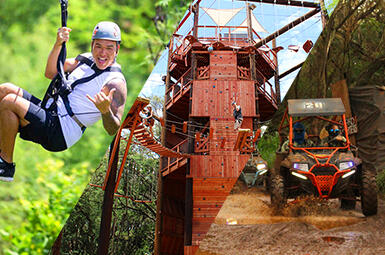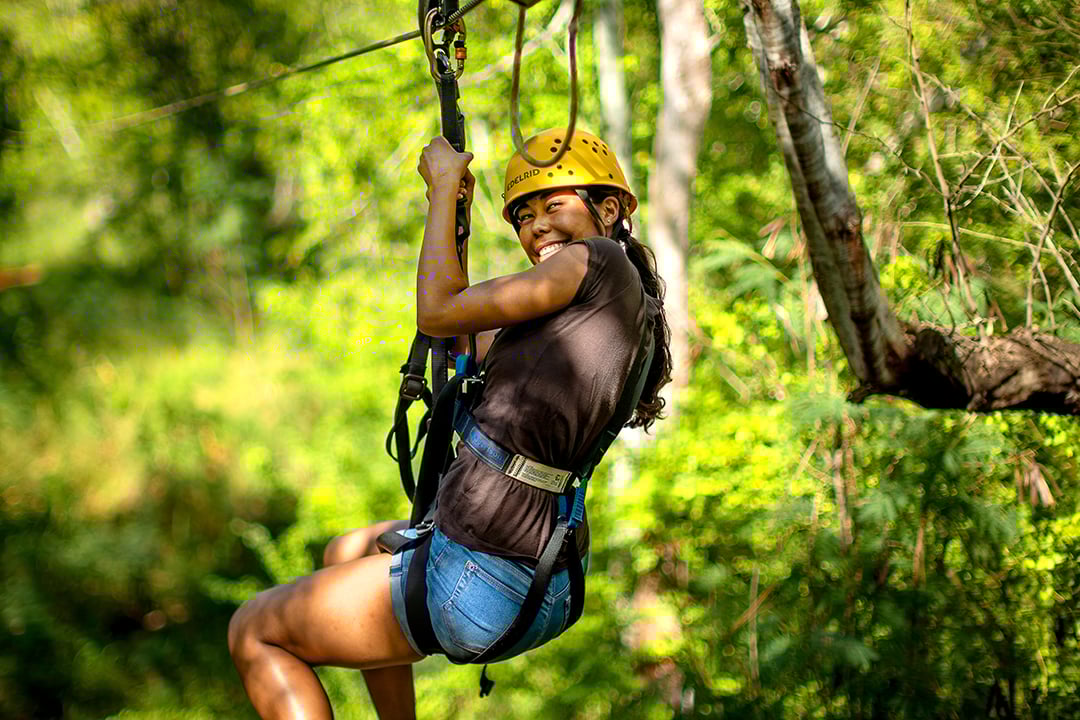
You’re standing on the edge of the platform. The Pacific breeze is kicking up, the jungle greenery is laid out beneath you like a velvet carpet, and your heart is doing a little rhythmic double-tap against your ribs.
Then the thought hits: “Wait... is this actually safe?”
Trust us, you aren’t the only one asking. From first timers clipping into a carabiner or to seasoned pros bringing the kids along, safety is the foundation of the fun. At Coral Crater, we believe you can’t truly let loose and enjoy the adrenaline if you’ve got a nagging "what if" in the back of your mind.
So, let’s talk shop. Here is everything you need to know about zipline safety in 2026, the regulations we follow here in Oahu, and exactly how we keep you flying high without the worry.
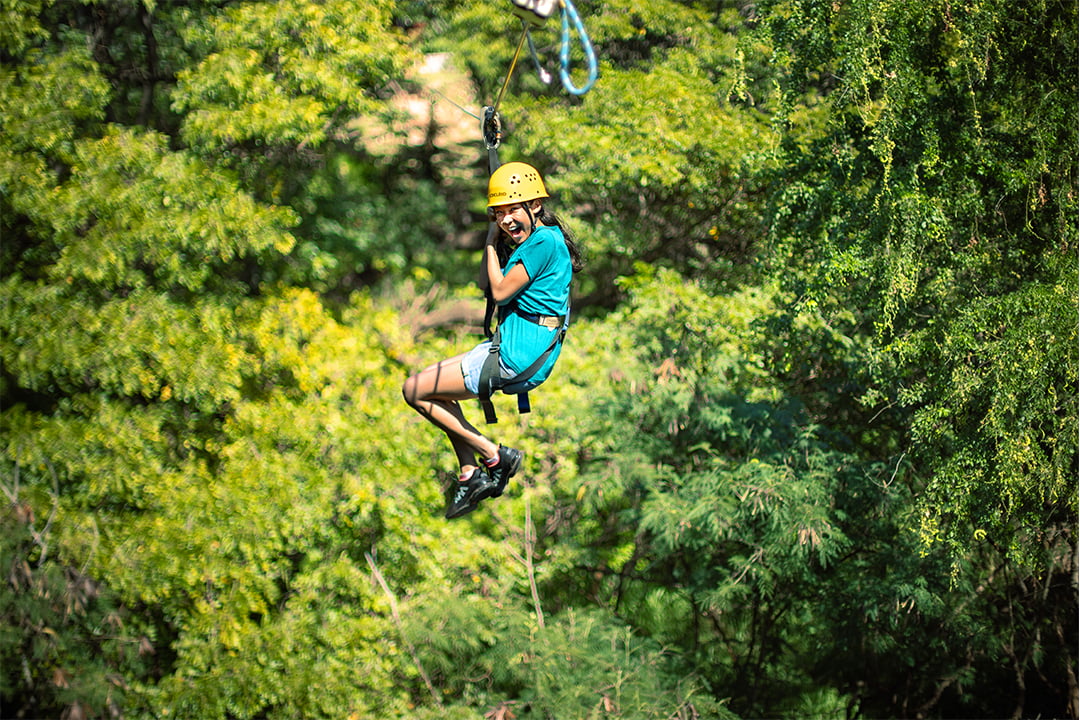
Statistically speaking, you’re more likely to get an injury driving your rental car to our park or tripping over your own flip-flops at the beach than you are on a professional zipline. In fact, modern commercial ziplining has an injury rate lower than common activities like golf or swimming. As we move into 2026, the technology has only gotten smarter, stronger, and more "human-proof."
We don’t just "wing it" at Coral Crater. We operate under the strict guidelines of the Association for Challenge Course Technology (ACCT). Think of them as the international referees of the zipline world.
Here’s how we maintain that gold standard:
In 2026, ziplining isn't just a cable and a prayer. It’s a feat of engineering.
1. The "No-Touch" Braking System
The most common cause of minor zipline injuries (like rope burns or jarring stops) is "hand-braking." At Coral Crater, we’ve eliminated that entirely. We use a modern automatic magnetic braking system. You don’t have to worry about when to slow down or how to stop. The tech handles it for you, bringing you to a smooth, controlled finish every single time.
2. The Adventure Tower & "Clic-It"
If you’re hitting our Adventure Tower, you’ll be using the Clic-It system. These are "communicating" carabiners. When one is open, the other stays locked. This means it is physically impossible to accidentally unclip yourself from the safety line while you’re navigating the obstacles.
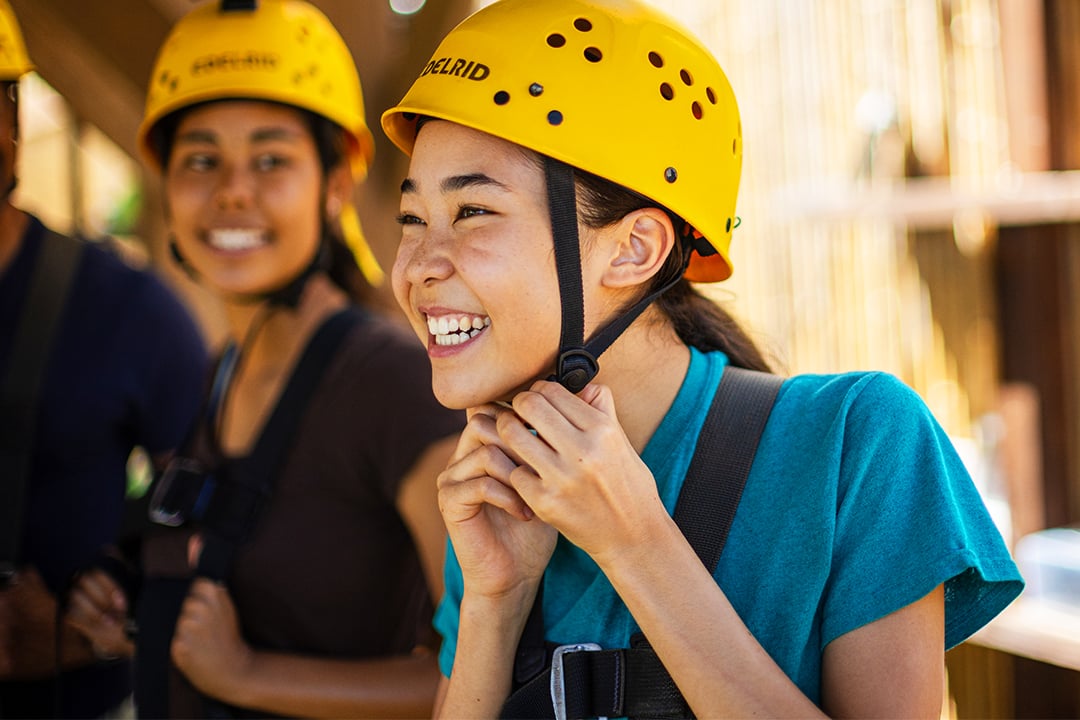
Our guides are famous for their jokes and laid-back island vibes, but behind the scenes, they are highly trained safety professionals. Every guide undergoes rigorous hours of training in technical rope work, rescue procedures, and guest management.
They are also experts at "psychological safety." We know that about half of our guests have a fear of heights. Our guides are trained to walk you through the process, build your confidence, and make sure you feel empowered before you take that first step off the deck.
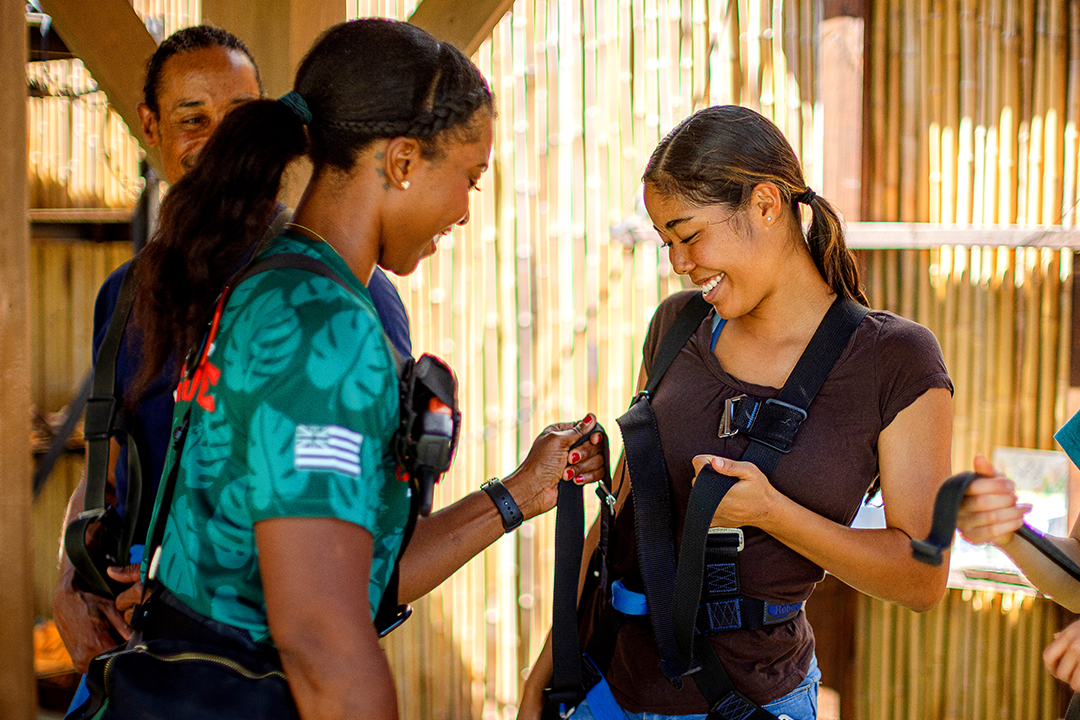
To keep the physics working in your favor, we do have a few "must-follows":
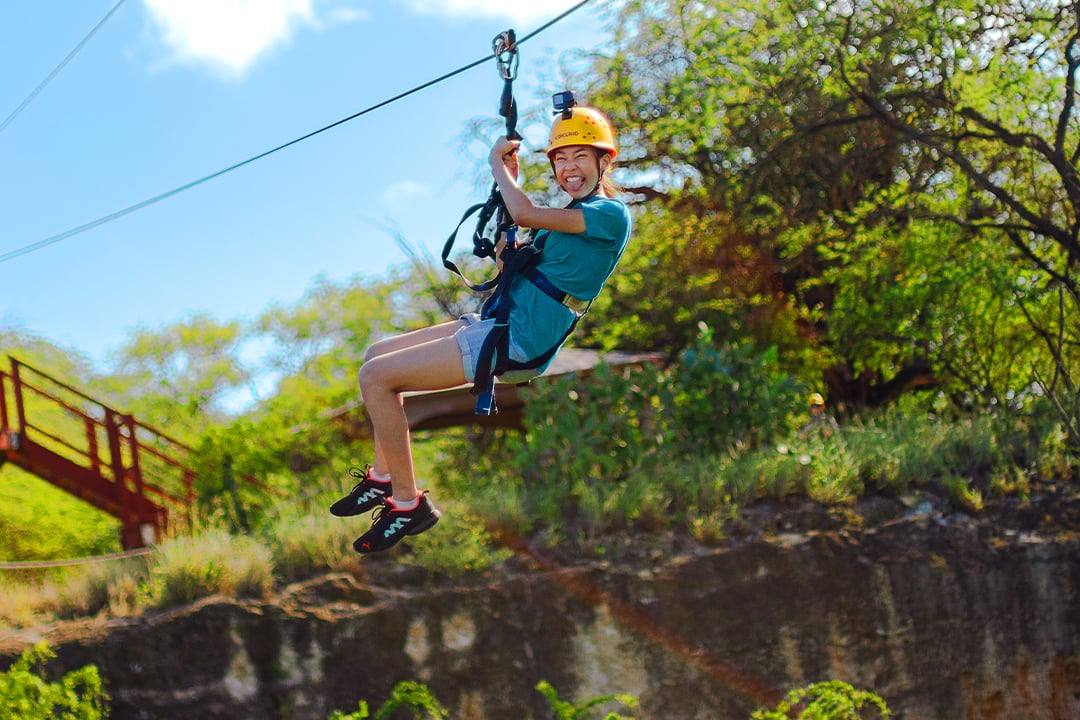
This is Hawaii—liquid sunshine is part of the deal! We generally zip in the rain. In fact, a "wet" line is often a faster, more exciting line. However, your safety is our priority. If we see high winds or lightning, we’ll pause the tours immediately. If we have to cancel for weather, we’ll always work with you to reschedule or get you sorted.
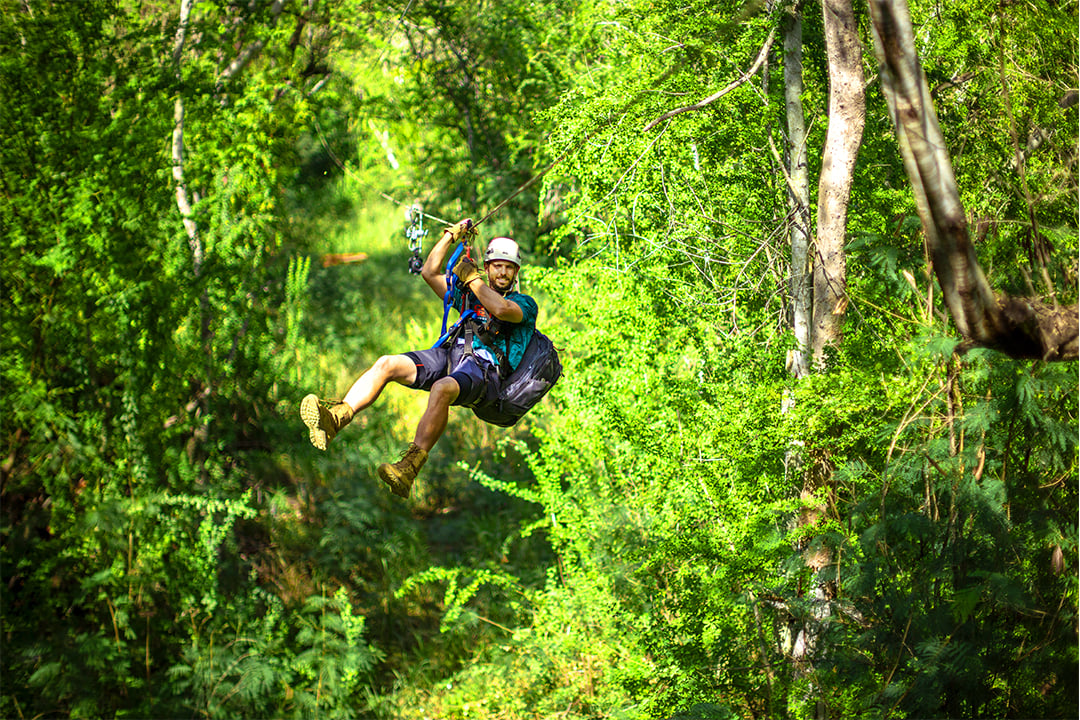
Safety isn't an accident; it's a procedure. When you book a tour at Coral Crater, you’re booking a team that lives and breathes these protocols so that you don’t have to.
Ready to see Oahu from a different perspective? Book your 2026 Zipline Adventure here and come fly with the pros!